Use of African Storybooks at Knls Kibera Library during COVID-19: July 30th 2020
Mary Kinyanjui, Senior Librarian
Introduction
Kibera Community Library has been projecting ASb storybooks on the screen for the children since the time the project was launched at the library in 2015. The projections used to be done at least three days in a week, depending on the number of schools visiting the library, and once a week it was done for outreach schools. The aim is to create fun reading stories, train children on how to create their own stories, re-tell stories they have read during projection and train them to read in different languages i.e. Kiswahili, English, vernacular etc. In Kenya, the schools were closed in the first week of March and libraries followed later in the second week due to Covid-19 when the 1st patient was identified. Term one of the school year was just about to end, and children were preparing for end of term exams.
Since March, it has been very challenging for children especially within the informal settlements because many of those from middle class and affluent families can access online lessons since they can afford smart phones and data for internet connection. It is unfortunate that the majority of the children from the impoverished Kibera slum are unable to access online classes or curriculum materials because they have no access to smart phones and cannot afford data for internet connection.
As a librarian, I believe every child deserves the chance to learn. Our focus as a community library in the midst of school and library lockdown, is on digital access and inclusion for the remote, socio-economically deprived families living within the informal settlement. They need to have an opportunity to continue enjoying reading and learning curriculum content just as they would normally do by visiting and using the library to read ASb stories, get revision materials and other digital information despite the Covid-19 pandemic. This is happening by use of the few devices we have managed to acquire. The ICT officer and I decided to request friends and others in our networks to donate devices such as smartphones and tablets. With these, we are able to reach children aged between 6 to 13 years and secondary school youths. The need for educational resources to support these learners and teachers is a key driver for the emergence of mobile learning since the lockdown following the Covid-19 outbreak.
We download the ASb Reader App on each phone/tablet for children to continue reading as many stories as possible. Since we shifted our attention to this, we have enabled children in about 22 households with an average of 6 children to have access to stories, revision papers, educational games and curriculum-aligned subject content. The phones are loaned out to the children in the company of the parent. They are supposed to return to the librarian after one month to assess, monitor and evaluate usage. If a family utilises the device well, the lending period is extended. Preliminary feedback shows that usage is extended to neighbours and that one device might be used by up to 20 children.
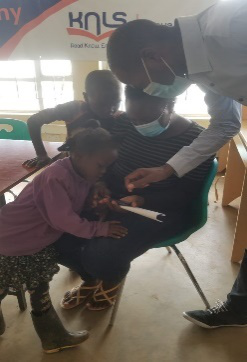
Before giving out the devices, a parent and the children are trained on how to use the ASb Reader App. The devices are secured with parental Control software to limit the applications’ accessibility and the time spent on the device. Currently, they are set to one and a half hours a day but unlimited storybook reading, therefore creating a safe space for the children. So far, 22 smartphones have been loaned out for free for up to a month. Apart from reading, this has also given the children and their family members an opportunity to learn about technology.
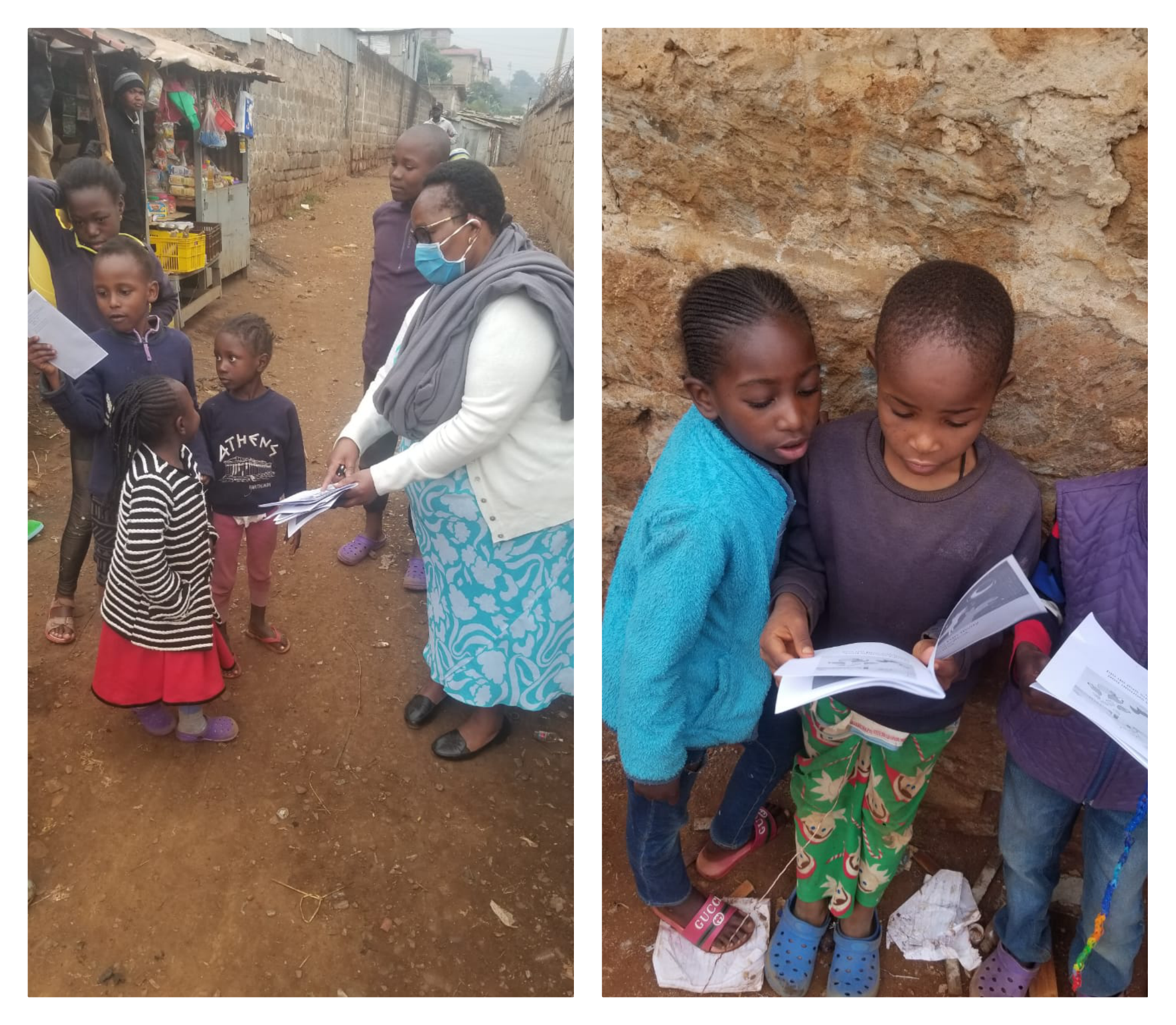
There is also another category of users whom we cannot lend the phones and tablets to. This category is the young readers below 6 years and those we feel the devices may not be safe. For them we print stories from the ASb website and give them to read at home under the supervision of parents. As of July 28th, we had given printed storybooks to 250 children. Access to digital and or print stories not only helps them to read but also keeps them busy and safe at home and at par with their peers elsewhere.
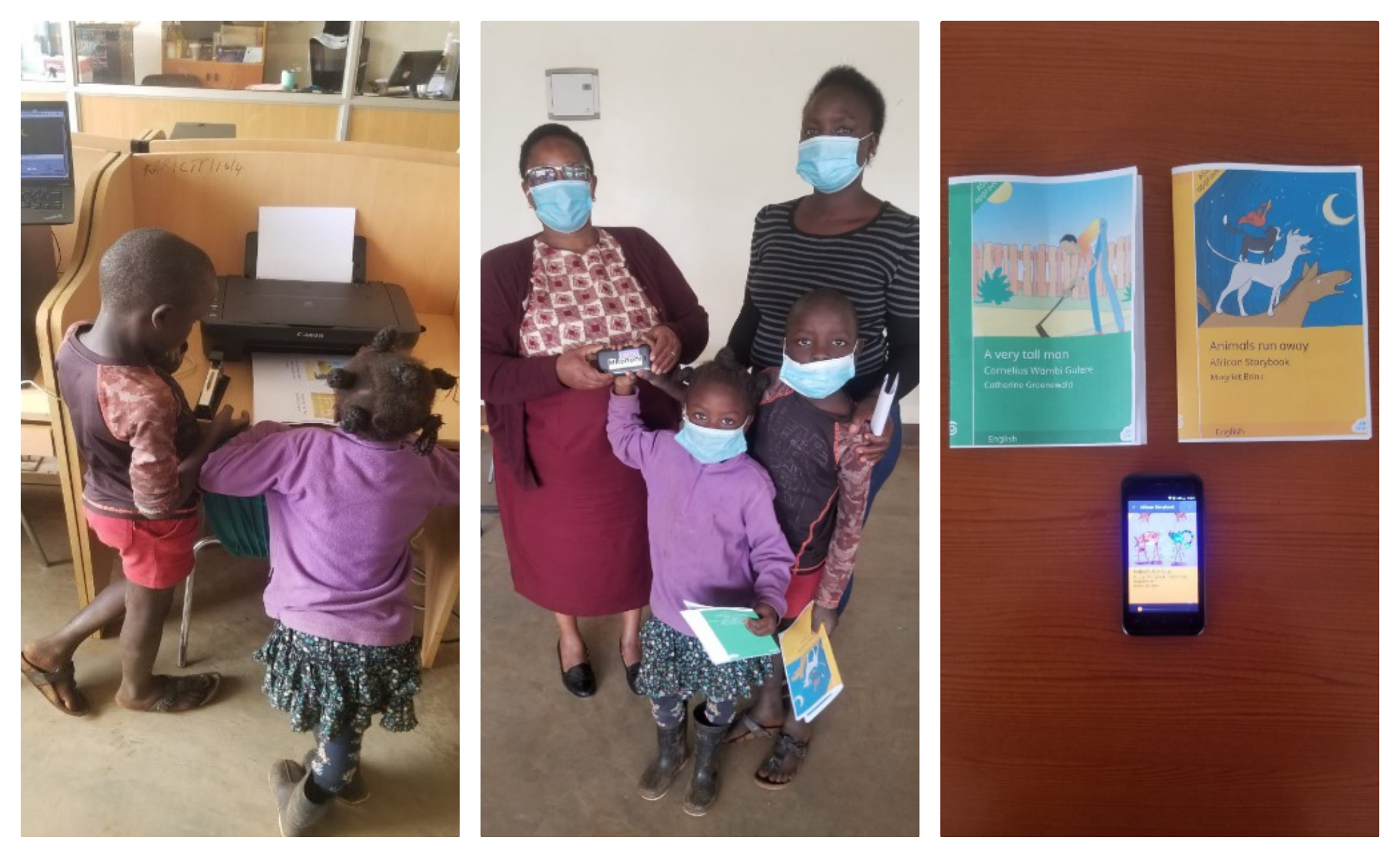
In addition, the parent receives a phone preloaded with the ASb Reader.
We also print and distribute revision papers for all school-going children and secondary school students. The librarian works very closely with some teachers and parents who volunteer to come and collect them from the library. I am able to work with 15 teachers who assist to distribute the printed revision papers observing the Covid-19 protocols. It is challenging for the librarian to access the slum. The teachers are able to reach the children since they live in Kibera and know where the children live. There are also some children who come to collect the past papers and printed stories from the library when the librarian opens.
Incentive to teachers and volunteers
We have been using the little Saide stipend that is given for ASb-related library activities to incentivise teachers to support children. This includes volunteering to come to the library to collect printed stories, the past papers and distributing to children and youths. Most of these teachers may never have a job again as they taught in the informal schools that might never reopen. Some of the stipend was also used to purchase printing papers when we started since the library does not have a budget for that activity.
Reflection
- I have to organise on how to visit the library at least twice a week despite the closure in order to print the stories and past papers because other staff are not allowed to visit the library due to Covid-19.
- Downloading ASb App onto phones and tablets is challenging and takes time.
- Although the teachers have been volunteering, the little allowance I have been giving them is over and it’s a task to them since they are not paid since lockdown.
- The children and teachers have to visit the library one by one (if not from the same family) to observe social distancing and others cannot afford masks.
Way forward
We have planned the following:
- Continue to look for more devices i.e. phones and tablets.
- Continue printing more stories and past papers.
- Encourage more teachers to be involved so that more children benefit.
- Continue to monitor and evaluate the process.
- Try to involve more parents despite the Covid-19-related difficulties experienced in Kibera.
- Organise an online training for teachers on how to create stories using the ASb Maker.
- Seek funding for a coloured printer cartridge as the office only has black and white – children love colour images in stories; and
- Track use: number of stories read, number of children reading, and how they are reading.
Impact
- Have managed to lend out 22 devices to 22 households – potentially reaching their neighbours.
- Teachers and parents have reported that children/students are happy with the stories, revision papers and educational games. They are doing exercises and taking to teachers in the area to mark for them.
- Children are re-writing short stories they have read and taking to teachers to check them.
- Some children are re-drawing the pictures they have seen in the stories as they read.
- Children who know how to read are teaching those who do not know.