Animating children’s literacy in rural Ghana with African Storybook
Peter K. Amoabil
Introduction
In the heart of rural Ghana, literacy is not just a skill, it is a beacon of hope, offering brighter opportunities and the promise of improved livelihoods. Peter K. Amoabil, the Executive Director of Rural Literacy Solutions (RLS) and a Champion of the African Storybook (ASb) Initiative, leads this transformative journey. Through the African Storybook (ASb) website, Peter launched RLS, an innovative project providing digital reading materials in both English and Dagbani, the mother tongue of many rural children. This initiative that is part of the larger digital literacy project in partnership with the Stone Arch Bridge Initiative for Education Resources, SABIER, uses technology to bridge educational gaps and foster a love for reading and writing among young learners.
A cornerstone of the Rural Literacy Solutions (RLS) digital literacy project is the use of the African Storybook website, a rich repository of children’s storybooks available in multiple African languages, including Dagbani. This platform has been instrumental in supplying culturally relevant and linguistically appropriate reading materials for the children involved in the RLS Moodlebox initiative. By accessing stories that reflect their own experiences and heritage, these children become more engaged and excited about reading, making learning a more meaningful and enjoyable experience.
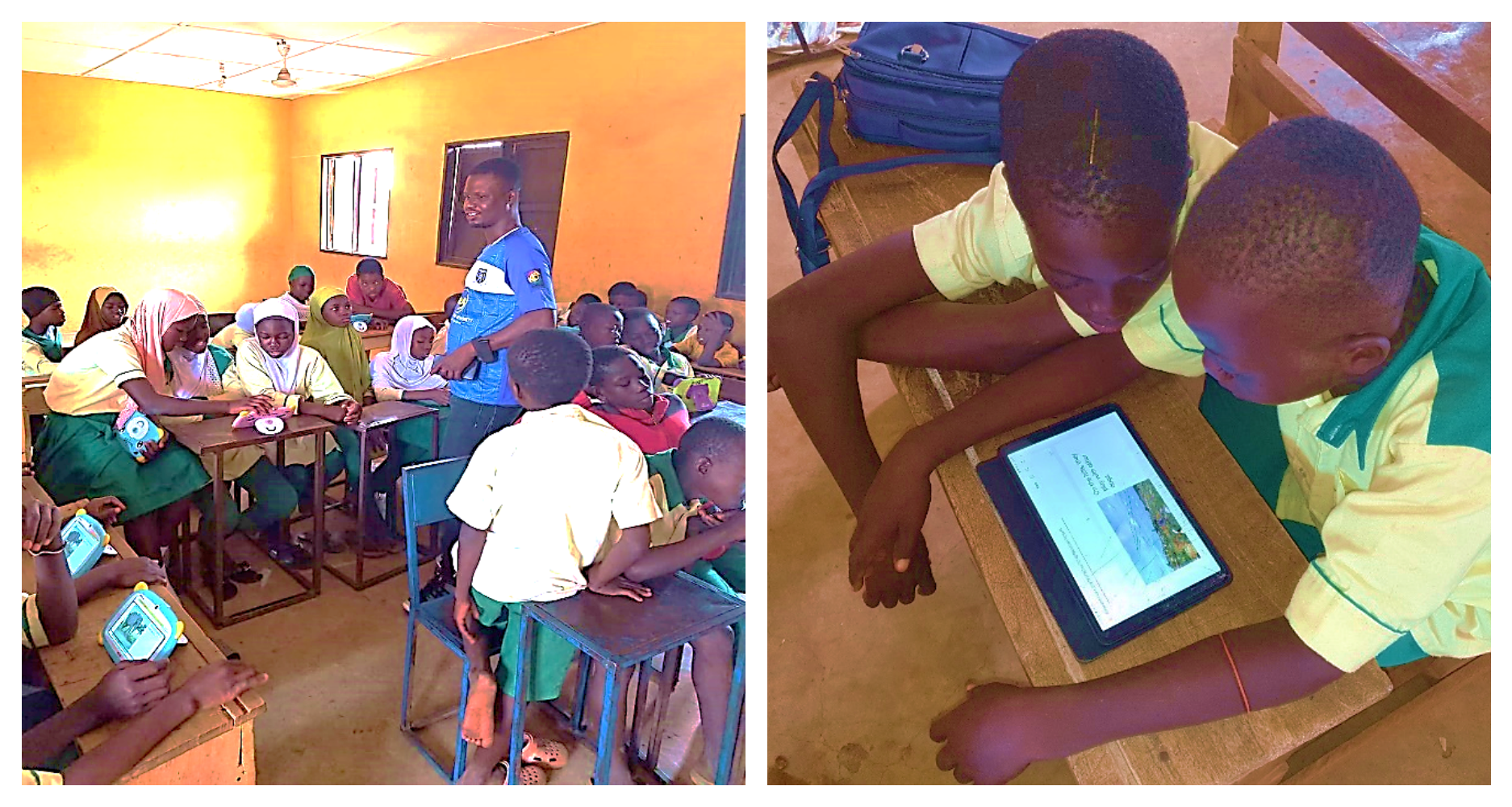
Left: Peter Amoabil leading a class in reading. Right: Reading in pairs
The true impact of this initiative was vividly demonstrated at Kanvilli Nuriya Primary School, Tamale, in the north of Ghana, where Grade 5 pupils were inspired to use their tablets to explore and write a storybook about their environment. With my guidance, these young learners captured images of their school environment and crafted a story based on their observations. This exercise not only honed their reading and writing skills but also instilled a sense of pride and ownership in their work. The culmination of their efforts was the creation of a digital picture storybook in their familiar language, Dagbani, an inspiring and tangible testament to their creativity and growth. View the digital storybook here.
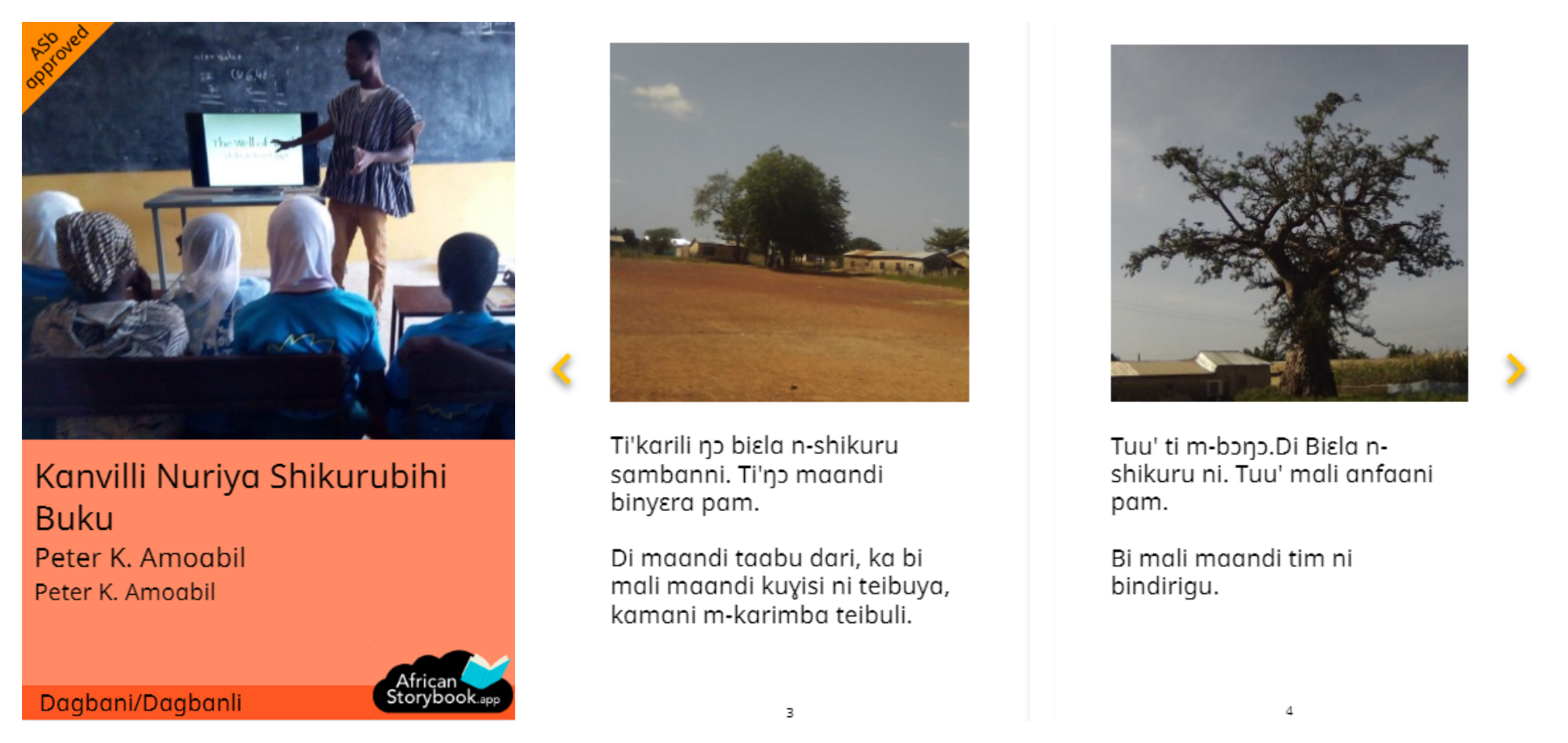
The publication of this book has had a profound impact on the children. Seeing their pictures and story published has filled them with a sense of accomplishment and joy. It has also provided them with a platform to share their unique experiences with the world, allowing other children to learn about their school and environment. This book serves as a powerful reminder of the potential that lies within every child when they are given the right tools and opportunities. The initiative has not only enhanced the children’s literacy skills but also boosted their confidence and inspired them to dream bigger.
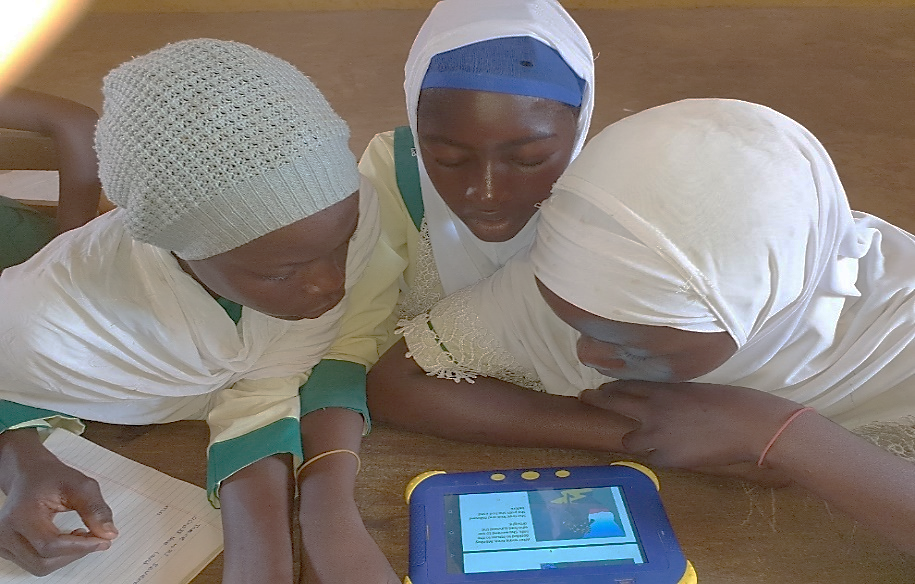
Engrossed in reading
In conclusion, my collaboration with Saide’s African Storybook and SABIER has created a ripple effect of positive change in rural communities. Providing digital reading materials in both English and Dagbani, has empowered children to embrace literacy and take pride in their cultural heritage. The success at Kanvilli Nuriya Primary School highlights the transformative power of education and the boundless potential of young minds when nurtured with care and creativity. This initiative stands as a beacon of hope and a model for other communities striving to improve literacy and educational outcomes for their children.